
Free PDF From Extraction to Emancipation: Development Reimagined
Do not alter your mind when you are starting to plan to have analysis behavior. This routine is a good as well as fantastic practice. You must enliven it with the best publications. Several publications reveal and also present there incredible web content based on each styles as well as topics. Even each book has different preference of writing; they will certainly give much better condition when checked out very well. This is just what makes us proudly existing From Extraction To Emancipation: Development Reimagined as one of the books to review now.
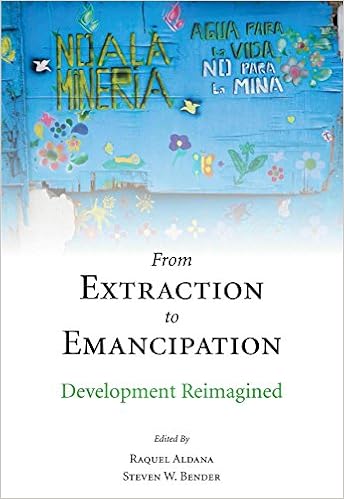
From Extraction to Emancipation: Development Reimagined

Free PDF From Extraction to Emancipation: Development Reimagined
From Extraction To Emancipation: Development Reimagined. Is this your leisure? Just what will you do after that? Having spare or spare time is really impressive. You can do every little thing without force. Well, we expect you to save you couple of time to review this publication From Extraction To Emancipation: Development Reimagined This is a god e-book to accompany you in this spare time. You will not be so tough to know something from this e-book From Extraction To Emancipation: Development Reimagined More, it will help you to obtain better information and encounter. Also you are having the wonderful jobs, reviewing this book From Extraction To Emancipation: Development Reimagined will certainly not include your thoughts.
Now, this issue is so very easy to fix. When you can link to the web, you can find and also obtain the book conveniently. When you really require the From Extraction To Emancipation: Development Reimagined to be your analysis material faster, you could see this web page and also click the web link that we have currently supplied. Guide prepares to order. When in other time you will certainly need much more days to get guide, in this write-up the soft file that we will certainly offer will be directly done.
However, some individuals will seek for the very best vendor book to check out as the very first recommendation. This is why; this From Extraction To Emancipation: Development Reimagined is presented to fulfil your need. Some individuals like reading this publication From Extraction To Emancipation: Development Reimagined as a result of this prominent book, however some love this as a result of favourite writer. Or, lots of also like reading this publication From Extraction To Emancipation: Development Reimagined because they truly have to read this book. It can be the one that truly like reading.
If you have found out the very best factors of reading this book, why you should browse the various other reason not to read? Checking out is not a problem. Checking out exactly will be a method to get the advice in doing whatever. The religions, politics, scientific researches, social, even fiction, and also other motifs will certainly help you to get better guidance in life. Obviously, it will certainly be appropriate based upon your genuine experience, however getting the experience from various other sources are likewise substantial.
Review
“The perceptive contributors to From Extraction to Emancipation: Development Reimagined have achieved the ambitious goal of the title. In the clear and fluid styles of each chapter, a broad selection of the hidden and not-so-hidden costs economic globalization are explored with a fine hand, and a number of well-conceived measures to promote the rights and protect the lands of indigenous populations are sketched out. From Extraction to Emancipation: Development Reimagined thus provides an important examination of the perils of today's dark alliance between central governments of poor nations across the globe and the national and trans-national corporations that trigger and sustain economic growth and influence law, and is a valuable addition to the library of anyone interested in better understanding today's swiftly developing and interconnected world.†— Jay Silver, J.D., LL.M., Professor of Law at St. Thomas University School of Law
Read more
About the Author
Raquel Aldana is Associate Professor of Law at University of the Pacific McGeorge School of Law. Steven Bender is Associate Dean for Planning and Strategic Initiatives at Seattle University School of Law.
Read more
Product details
Paperback: 296 pages
Publisher: Carolina Academic Pr (May 20, 2018)
Language: English
ISBN-10: 1531010180
ISBN-13: 978-1531010188
Product Dimensions:
6 x 0.8 x 8.8 inches
Shipping Weight: 1.1 pounds (View shipping rates and policies)
Average Customer Review:
5.0 out of 5 stars
1 customer review
Amazon Best Sellers Rank:
#989,685 in Books (See Top 100 in Books)
This book works on so many levels. It gives a historical perspective on how Guatemala's extractive industries became the single biggest players in the economic and political life of the country. It examines how these industries displace people in Guatemala and the region—and how those same people are fighting back. And it provides insightful prescriptions for moving forward that give both a roadmap and hope for the future.The book encompasses five broad sectors, each of which contains several essays: I. Corporate Social ResponsibilityII. Development and the EnvironmentIII. Development and SovereigntyIV. Development, Investment and TradeV. Development and MigrationAs a professor of international trade law interested in migration and free movement of people, I was particularly drawn to the last two chapters. They give an excellent overview of how Guatemala came to find itself so dependent on these extractive industries (particularly mining) that pollute and damage the environment and create wealth only for the lucky few. As a direct result of the policies that favor the few at the expense of the many, the people of Guatemala (and the Northern Triangle countries) face enormous income inequality, environmental degradation from these extractive industries—particularly on land of the indigenous population, gangs, violence and human rights violations. These challenges are not insurmountable, the authors maintain, but the path forward is often at odds with the interests of those in power.While I enjoyed all the essays, the three most striking to me are Lauren Gilbert's Gender Violence, State Action, and Power and Control in the Northern Triangle; Blake Nordahl's A Migration Story from the Sugar Fields of Southwest Guatemala: A Case for Treating Corporations as Persecutors Under Asylum and Refugee Law; and, Raquel Aldana's The Indispensable Ones: A Story of Resistance from La Puya. Those three essays helped me understand why so many women and unaccompanied minors are making the perilous overland journey to the U.S. border seeking refuge. It makes the treatment they receive at the hands of the US government that much more deplorable.Gilbert's essay explores gender violence and the use of rape as a weapon of war in Guatemala's brutal civil war. When peace came, it did not bring with it recognition of women's unique suffering, and as a result few resources were deployed to help them heal—and to enshrine protections against such future violations into law. Even the international observer missions failed to identify, let alone address, the instances of rape and violence against women. Nordahl's article documents the experience of a seventeen-year-old, Evelia, one in a long line of unaccompanied minors making the dangerous journey from the Northern Triangle countries to the United States in search of refuge. Evelia ran from an abusive boyfriend, leaving behind her only child. She was one of the lucky ones—her asylum petition was granted. Most others in similar circumstances are labeled economic migrants and are turned away at the border. Nordahl argues for a more nuanced understanding of the difference between economic migrants, who are given no protection, and those facing economic persecution, whom he believes refugee law should seek to protect. Nordahl maintains that Evelia was not only a victim of domestic abuse; as a domestic worker, she also faced economic persecution—which the courts have defined as the “deliberate imposition of severe economic disadvantage or the deprivation of liberty, food, housing, employment or other essentials of life.†Nordhal argues that in light of the Guatemalan Government’s collusion in the exploitation of workers through its unwillingness to redress structural inequality from colonial periods to the present day, the government has shown itself to be unable or unwilling to protect workers like Evelia who hail from rural indigenous communities. These vulnerable women should not have to suffer the terror and indignity of domestic violence before their plight can be properly addressed.  Aldana’s essay is perhaps the most hopeful. It documents the courage and persistence of the women of La Puya who successfully fought against a rich mining company. At the same time, Aldana’s piece is a cautionary tale about what success looks like in these circumstances. The mine was able to open without any consultation from local communities who were affected. They operated for years, despite the near constant protests from the women of La Puya. Even after Guatemala’s highest court determined mine operators had violated the law by failing to consult with the local population, the owners continued their stealth operation. When they finally fled, they left behind a devastated land with torn out trees and polluted waters. The community who had fought so long and hard to prevent mining operations are now responsible for cleaning up the mess. Despite all of that, Aldana’s essay documents the persistence of a community determined to preserve the heritage of their future generations. These women risked everything to do what was right. They are indeed The Indispensable Ones.Note: I was provided a review copy of this book. All views are my own.
From Extraction to Emancipation: Development Reimagined PDF
From Extraction to Emancipation: Development Reimagined EPub
From Extraction to Emancipation: Development Reimagined Doc
From Extraction to Emancipation: Development Reimagined iBooks
From Extraction to Emancipation: Development Reimagined rtf
From Extraction to Emancipation: Development Reimagined Mobipocket
From Extraction to Emancipation: Development Reimagined Kindle
Tidak ada komentar:
Write komentar